
What an Imperial Resident Lookup Can Confirm
A name search is only useful when the result has a clear record role. The coverage table separates a parcel relationship, a court index, a vital event, a voter self-result, and a public business role. None of those rows alone proves that a person currently lives in Imperial. The strongest match uses a shared address, date, spouse, business, case, or family relationship and then checks the underlying record with its custodian.
| Record | What It Confirms | Where | Access |
|---|---|---|---|
| Assessment or tax parcel | Relationship to a parcel, situs, tax-mailing destination, value, or exemption | Imperial County Assessor and tax portal | Address or APN; no owner-name internet search |
| Recorded document | Indexed party role, transaction date, legal description, and parcel clue | RecorderWorks and older office indexes | 1986 forward online; office and copy form fallback |
| Superior Court case | Party spelling, case number, filing date, and permitted filings | Imperial Superior Court | Case-number access, paid name search, account document search |
| Birth, death, or marriage certificate | Event, place, date, parties, and sometimes parents | County Clerk-Recorder or CDPH | Authorized or informational route, with access limits |
| Voter status | One person's registration status, polling place, districts, and ballot status | California Secretary of State | Self-lookup with personal identifiers |
| Business or professional record | Entity, agent, license, status, public address, or discipline | SOS bizfile and DCA | Free public search; role is not residence |
| Probate, obituary, or yearbook | Kin, heir, date, former classmate, or life-history clue | Court, library, IVC, or museum | Collection or case inquiry, with gaps |
The table is a plan for verification, not a promise that every source will return a result. A protected address may be suppressed. A sealed case may not appear. A certificate request can be rejected when the requester is not in an authorized class. A business filing may show only a mailing address. Treat every result as a dated clue until a second record supports the same person.
Build an Imperial Resident Identity Match
The safest way to look up a resident is to preserve details that separate people with the same name. Keep the exact middle name or initial, suffix, prior surname, town section, and date on every row. Compare two independent records with a shared parcel, spouse, business, age band, case address, or family link. Read the role before drawing a conclusion: a grantor, defendant, petitioner, agent, trustee, licensee, and voter are not the same kind of evidence.
- Write the name exactly as supplied, including middle initial, suffix, Spanish compound surname components, or a former surname when known.
- Choose the source that matches the question. Use an address or APN for a parcel clue, a court case for litigation, a certificate for an event, or a library collection for a former classmate.
- Record the result's date, role, address type, case or document number, and custodian. Do not copy a name without its context.
- Check a second source with a different purpose. A deed can support a parcel link, while a court or business record can support a name and date.
- Obtain the underlying document or certificate when a material decision depends on the match. A search index is not the same as an image or certified copy.
For an heir, begin with the decedent and probate case, then inspect petitions, notices, representative records, recorder affidavits of death, and later transfers. This resident lookup checkpoint keeps the name tied to a file and a date. For a former classmate, use IVC yearbooks from 1923-1966 and student newspapers from 1968-2005 before trying current public records. For an adopted person or birth relative, use California's official adoption-information and consent routes, not a sealed file treated as public.
Note: A shared name is a search lead; a shared date and record role are what make an identity match worth checking.
Imperial Resident Court Searches Return Case Keys
Imperial Superior Court handles civil, criminal, family, probate, small-claims, and traffic matters. Its public ROA or case lookup is case-number based. The public landing page allows research of public cases but excludes sealed and confidential material. A person who has only a name can use the separate Named Record Searches service after creating an account and prepaying. That paid service returns only matching case numbers and filing dates. A charge applies even when there are no matches, and the current dollar amount is not published on the public landing page.
California Rule of Court 2.507 prevents the public from searching party names by date of birth or driver's-license number. A name plus DOB or license inquiry for a criminal record must go through the court's contact route. The court's Document Search tab is a different path: an account can access permissible public documents from November 2017 to the present, with the display limited to the 150 most recent documents. Older digitized public material may require a clerk request. Adoption, juvenile, mental-health, search-warrant, sealed, party-confidential, and court-confidential material remains excluded.
The Imperial Superior Court locations and contacts page identifies the clerk access points for the El Centro courthouses.
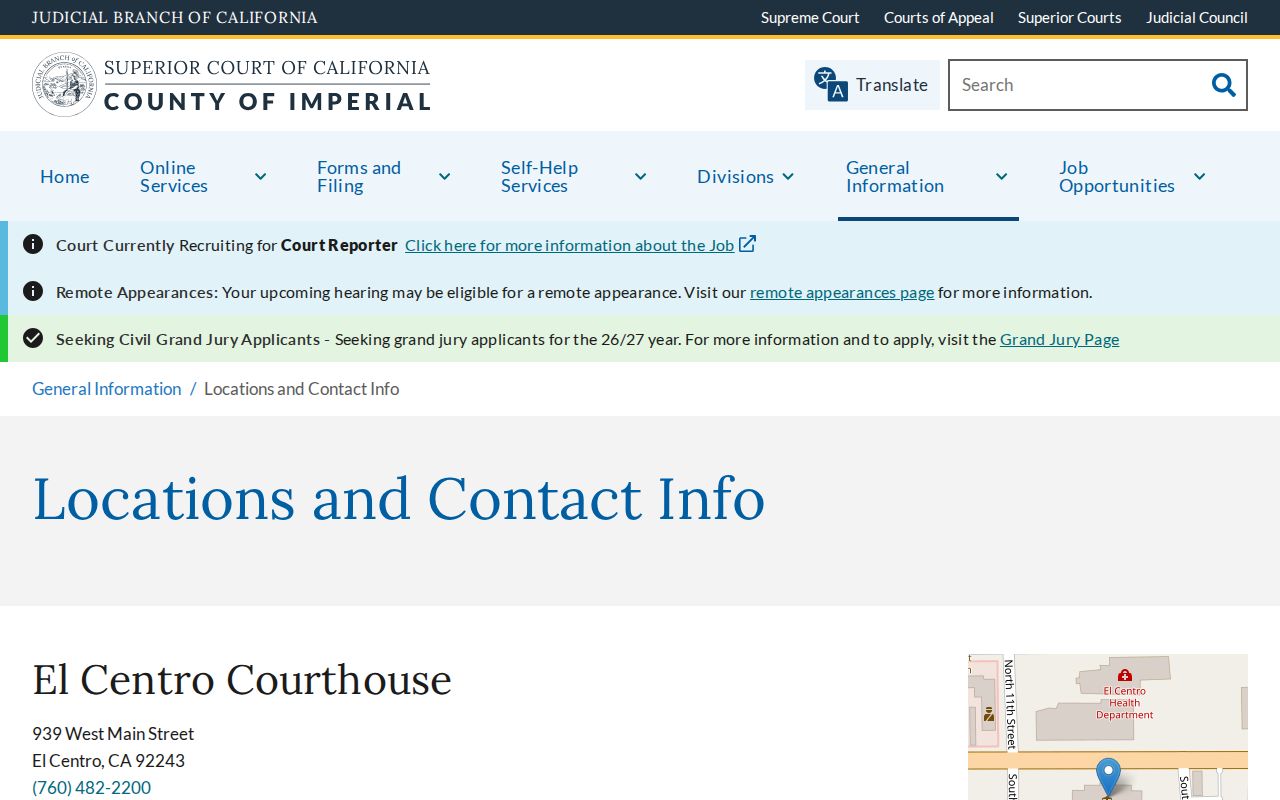
The El Centro Courthouse at 939 W. Main St. and El Centro Criminal Courthouse at 650 Wake Ave. list (760) 482-2200 and weekday 8 a.m. to 4 p.m. hours. Digital Services lists (760) 482-2273 and DigitalServices@imperial.courts.ca.gov. These are access routes, not proof that a named person is a current Imperial resident.
| Result field or route | What it means |
|---|---|
| Named Record Search | Matching case number and filing date only; paid search and no DOB or driver's-license public key. |
| Case-number ROA | Public case register or available case material when the number is known. |
| Document Search | Permissible public filings from November 2017 forward; most recent 150 display. |
| My Existing Cases | Authenticated account view with case number, case name, eFiling title, category, filing date, role, status, and action. |
- Docket or case index
- A register of a court matter and its events, not a complete copy of every filing.
- Index versus image
- An index points to a record; an image or filed document supplies the text that can be reviewed.
- Certified copy
- A clerk-authenticated copy issued under the court's current fee and request rules.
Imperial Federal Resident Record Fallbacks
Federal matters involving Imperial County fall within the Southern District of California. The federal case route is PACER, which can search nationally or within a court's CM/ECF system. It is a separate record set from Imperial Superior Court. A federal result may help confirm a case number, filing party, or date, but it still needs the correct district and document context before it is paired with a local record.
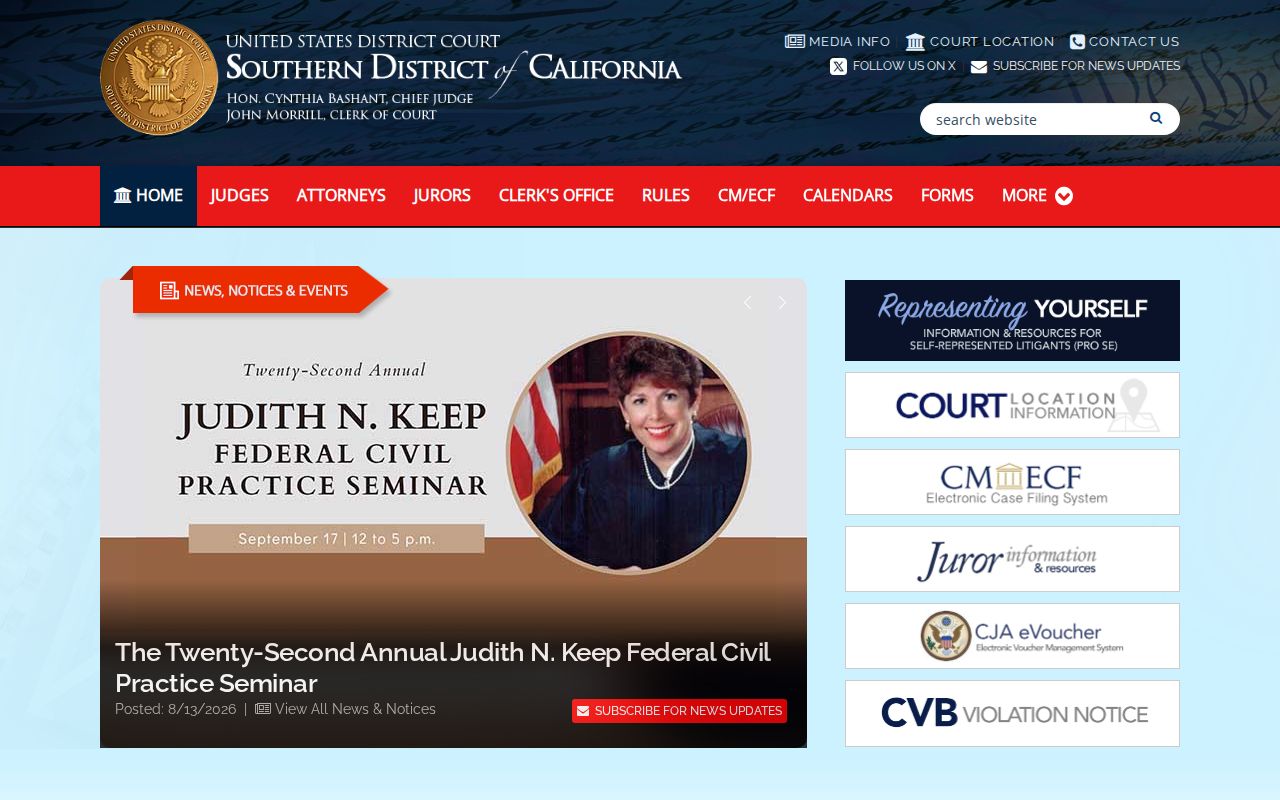
The Southern District of California court site is the jurisdiction source for federal matters tied to Imperial County.
The PACER access page is the official federal search route.
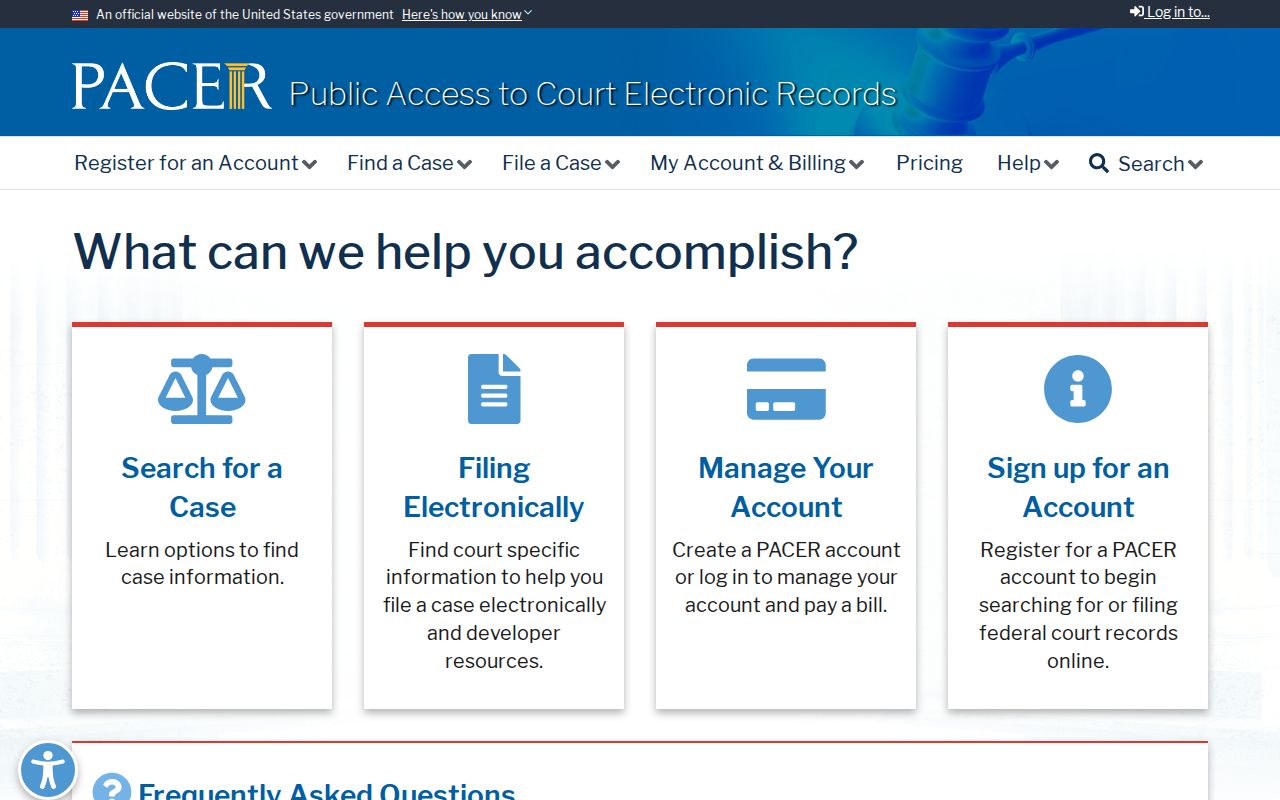
Current PACER pricing in the research is $0.10 per page and $2.40 per audio file. Quarterly charges of $30 or less are waived. Most documents have a 30-page or $3 cap, except transcripts and non-case-specific reports. Download only the filing needed for the identity question, then compare its caption, date, and party role with the local record.
Imperial Vital Records Have Access Classes
Imperial County issues certificates for births and deaths that occur in the county and marriages purchased or registered there. The Clerk-Recorder mail route uses 940 W. Main St., Suite 202, El Centro, CA 92243. An authorized-copy mail request requires a signed sworn statement with notarization, and payment is by check or money order to the Imperial County Clerk-Recorder. The county's 2026 fees are $34 for birth, $26 for death, and $19 for marriage. The county vital-record mail form sets out the application route, while the 2026 fee notice supplies the current county schedule. Online ordering uses the county's authorized vendor and requires the printed acknowledgment to be notarized and faxed to (442) 265-1091.
CDPH-Vital Records holds statewide permanent public birth and death records from July 1905 and statewide marriage and divorce data within its coverage. Its 2026 fees listed in the research are birth $31, death $26, public marriage $19, dissolution certificate $18, fetal death $23, and stillbirth $28. CDPH warns that receipt logging can take four to six weeks and has no expedited service. A no-record result retains the fee as a search fee under section 103650.
Authorized certified copies and informational certified copies serve different purposes. Informational copies are the broad-access route but carry the legend “Informational, Not a Valid Document to Establish Identity.” Authorized copies are limited to eligible relationship or official categories under Health and Safety Code sections 103526 and 103526.5. Confidential marriage copies are limited under Family Code section 509, normally to either spouse absent a court order. California does not use a simple age-based rule that automatically opens every vital record.
The California Department of Public Health vital-records hub is the statewide route for forms, fees, and access rules.
A certificate can confirm an event, parties, date, place, and sometimes parents. It does not by itself prove that the named person lived at a later address. Match the certificate to a dated parcel, court, business, or family record when the identity question requires more than the event.
Imperial Resident Voter Status Is Self-Service
The California Secretary of State's My Voter Status tool asks for first name, last name, date of birth, a California driver license or state ID with an “I do not have” option, the last four Social Security digits with the same option, and reCAPTCHA. It returns the submitted person's registration status and location, party and language preference, polling place, election information, county contact, and ballot status. It does not provide a public name search or an Imperial street browse.
The County Registrar of Voters is at 940 W. Main St., Suite 206, El Centro, phone (442) 265-1060, weekdays 8 a.m. to 5 p.m. and closed noon to 1 p.m. A broader voter file requires a permitted election, scholarly, journalistic, political, or governmental purpose, plus an application, beneficiary, geographic scope, restrictions, identification, and penalty-of-perjury signature. Elections Code section 2194 and Government Code section 7924.000 limit casual use. Driver-license numbers, Social Security numbers, signatures, unique identifiers, and protected-voter data are excluded.
The California voter-status self-lookup shows why a personal match is different from a public resident search.
Use voter status only for the person who can supply the matching details, or use the Registrar's lawful data process. A result can support a self-verification date, not a claim that every person at an Imperial address is registered there.
Imperial Resident Probate and Business Trails
Different life questions call for different custodians. An heir search begins with the decedent and probate case, then moves through petitions, notices, representative records, recorder affidavits of death, and later transfers. A former classmate search fits IVC yearbooks from 1923-1966, student newspapers from 1968-2005, catalogs from 1922 to the present, or local newspapers. The Pioneers' Museum adds life histories, letters, photographs, and documents by appointment, with a stated $25 research fee and possible additional hourly fee.
A public business role can be checked through California Secretary of State bizfile Online, the Imperial fictitious-business-name route, and a city permit or license file. Bizfile can return an entity name, date, status, jurisdiction, street or mailing address, service agent, and filings. A DCA license record can show a board, license type, number, status, issue or expiry information, public address, and discipline. Neither a business address nor a professional license is residence proof.
The State Controller's unclaimed-property search can return a name, reported holder, or locality clue and begins a free claim route. A claim still needs proof. An obituary can add kin and former residence, but family-submitted details should be corroborated with a probate, court, certificate, or recorded document.
Imperial Resident Registry Sources Are Narrow
Law-enforcement and registry tools have narrow purposes and should not be combined into a general personal profile. The California Department of Corrections and Rehabilitation Incarcerated Person Locator accepts a last name or CDCR number and can display name, age, CDCR number, location, admission, commitment county, and parole-eligible date. The information is locator data, not proof of current residence in Imperial.
The California Department of Corrections and Rehabilitation locator is the official state route for its custody records.
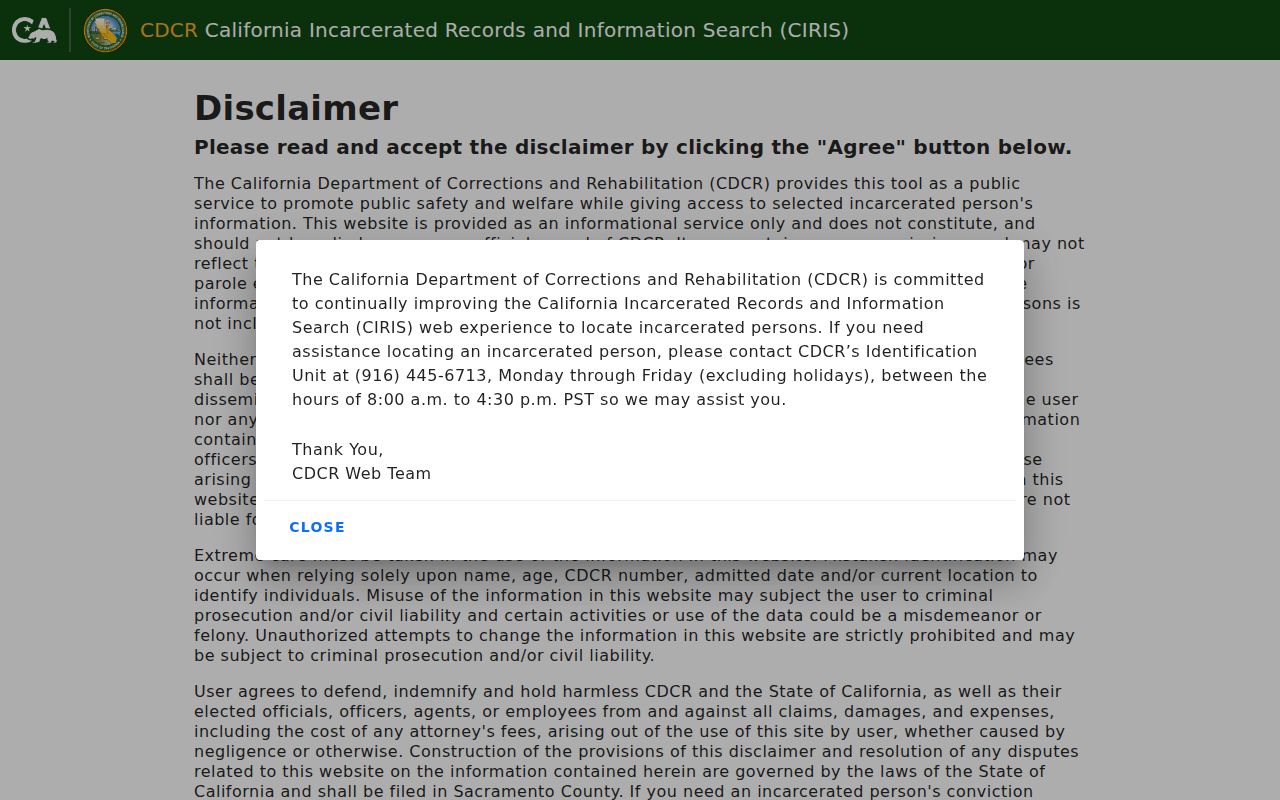
The locator's fields are limited to the state system. A county question may instead require the Imperial County Sheriff inmate-search page, a booking-summary request, the Corrections phone line, VINE, or a court case number, and no verified public Sheriff roster was found.
The California Megan's Law registry provides the official source for the registry search shown below.
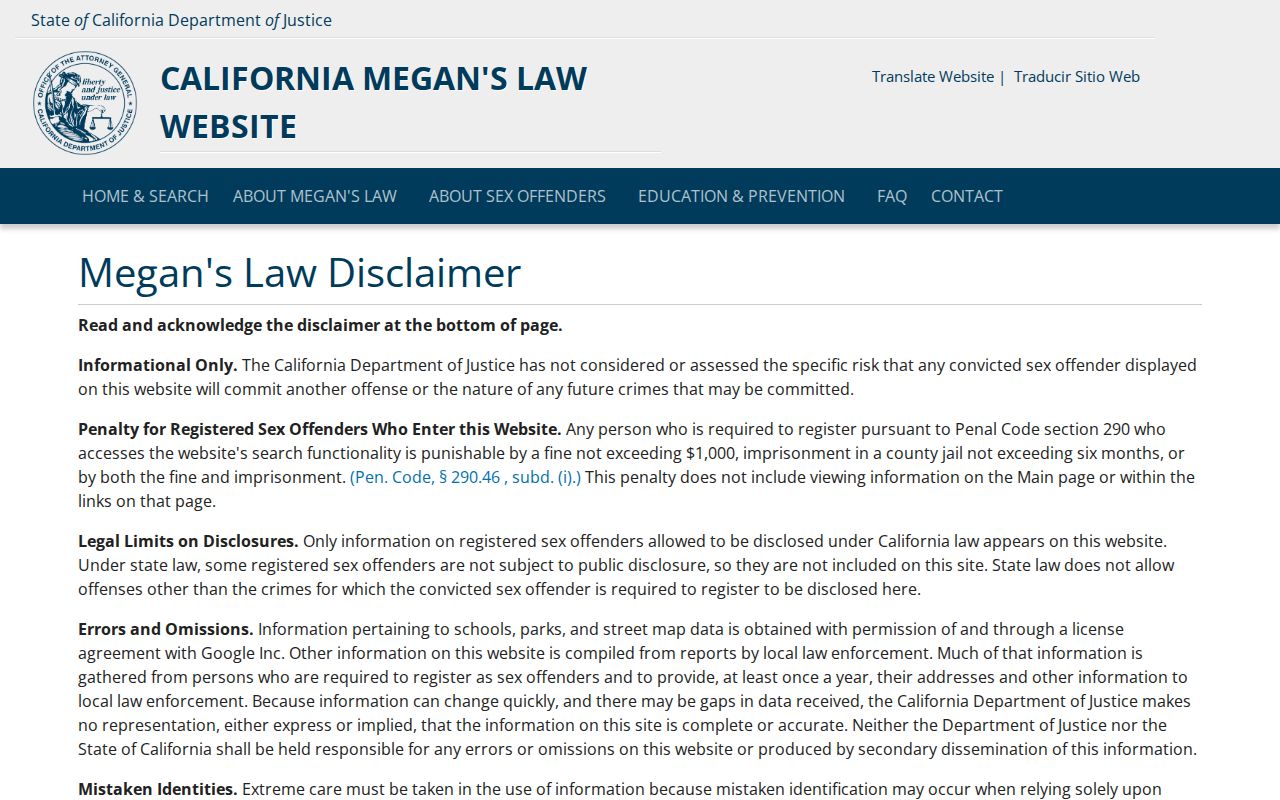
Megan's Law supports name, city, county, ZIP, school or park vicinity, and other statutory search modes. It displays only legally permitted identity, description, conviction, location, or compliance information, and some registrants are excluded. Penal Code section 290.46 limits misuse. Treat any result as a registry entry with a scope, not as a complete account of a person's life.
Privacy Limits on an Imperial Resident Lookup
A lawful resident lookup stops when a record is sealed, confidential, protected, or outside the custodian's access rule. California's Safe at Home program gives qualifying threatened or victimized people a substitute mailing address, mail forwarding, service-of-process agency, and confidential voter registration. Apply through an enrolling agency. The program does not change identity, compel private acceptance, or erase a parcel's legal description. The California Consumer Privacy Act and the Delete Act's DROP system can address covered data-broker handling. Since January 2026, one request can reach registered brokers; from August 1, brokers must retrieve requests at least every 45 days, subject to exemptions. Deletion does not erase deeds or court files.
Use the California Public Records Act for an existing, focused record, not for an agency-created dossier. Identify the address, APN, case number, document number, date span, or record series. The City of Imperial CPRA form accepts a description and can be sent by email, fax, or mail. A public office can redact protected fields and still provide a responsive record. When an index result is not enough, request the underlying public document or a certified copy from the custodian.
Lawful use. Use names and records for family history, reconnecting with a classmate, estate research, property questions, or civic review. Do not use a resident lookup to stalk, harass, threaten, impersonate, or defeat a confidentiality program.
The final verification note should say what was confirmed, by whom, on what date, and what remains unknown. That small discipline protects same-name people and keeps a public record from being presented as a current residence claim.