
Imperial City Directory Years and Holdings
The strongest verified city directory trail is FamilySearch catalog 1038130, titled Imperial Valley (California) city and county directories. The catalog covers Imperial with several other valley towns and identifies three 35mm reels made from originals at multiple libraries and societies. The table keeps each known run visible. “Access” means the catalog or research route was identified; it does not mean that an unrestricted page image was inspected during the research run.
| Collection | Years | Where Held | Access |
|---|---|---|---|
| Imperial Valley city and county directory | 1908 | FamilySearch catalog 1038130, microfilm | Item 2308347, DGS 9178551 |
| Imperial Valley business and resident directory | 1910-1911 | FamilySearch catalog 1038130, microfilm | Item 2308348, DGS 9178552 |
| Thurston's Imperial Valley resident directory | 1914-1915 | FamilySearch catalog 1038130, microfilm | Item 2308347, DGS 9178551 |
| Thurston's Imperial Valley resident directory | 1917-1918 | FamilySearch catalog 1038130, microfilm | Item 2308347, DGS 9178551 |
| Imperial Valley directory | 1918-1919 | FamilySearch catalog 1038130, microfilm | Item 2308348, DGS 9178552 |
| Thurston's Imperial Valley resident directory | 1920-1921 | FamilySearch catalog 1038130, microfilm | Item 2308348, DGS 9178552 |
| Imperial Valley directory | 1924 | FamilySearch catalog 1038130, microfilm | Item 2308348, DGS 9178552 |
| Imperial Valley directory | 1926 | FamilySearch catalog 1038130, microfilm | Item 2308349, DGS 9178553 |
| Imperial Valley directory | 1928 | FamilySearch catalog 1038130, microfilm | Item 2308349, DGS 9178553 |
| Imperial Valley directory | 1930 | FamilySearch catalog 1038130, microfilm | Item 2308349, DGS 9178553 |
| Imperial Valley directories | 1926, 1928, 1930, 1933 | NARA circa-1930 directory holdings | Research access through NARA |
The California Revealed local-history search is a useful digitization route to check alongside the catalog record.
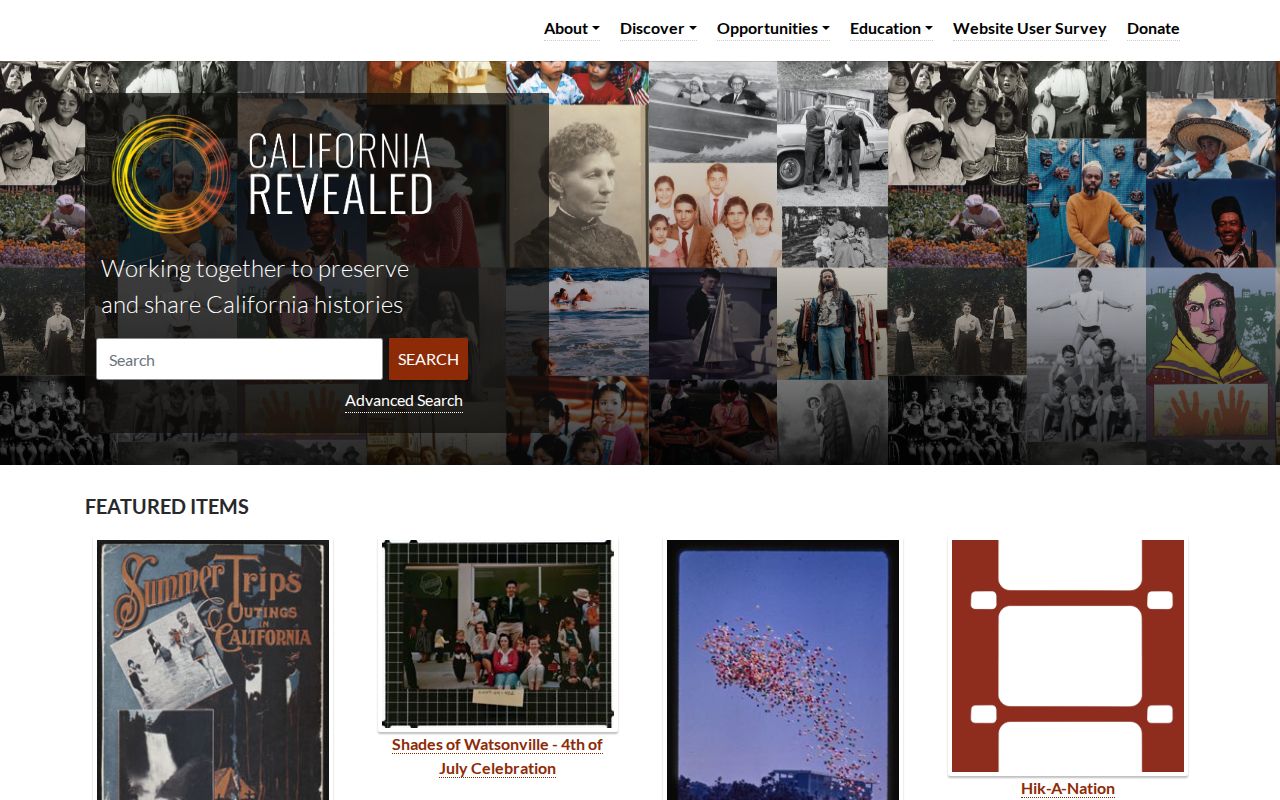
California Revealed supports discovery of local-history material, but a result still needs its title, town section, year, and image status recorded before it is used as a household source.
Publishers Behind Imperial Directory Runs
The publisher changes help date the shelf. The Imperial Valley City and County Directory Co. appears in 1908. Albert G. Thurston compiled the 1910-1911 and 1917-1918 volumes, and Thurston's name appears in the 1914-1915 and 1920-1921 titles. Western Map and Publishing Co. is tied to 1914-1915, while Western Directory Co. appears in 1918-1919. Los Angeles Directory Co. produced the 1924, 1926, 1928, and 1930 runs listed in the catalog. This is a chronology of cataloged publications, not a claim that every year between them was printed.
A surname search should begin with the Imperial section header because the valley scope is broad. A person in Imperial can share a surname with a person in El Centro or Calexico, and a business entry may sit in a different part of the volume than a resident entry. Save the title page or catalog citation, publisher, year, town section, and exact transcription. If a volume is missing, mark the gap rather than filling it with a later year.
- 1908: The Imperial Valley City and County Directory Co. run provides the first verified valley checkpoint.
- 1910-1921: Thurston and Western Directory volumes create a set of checkpoints around the 1910 and 1920 censuses.
- 1924-1930: Los Angeles Directory Co. volumes continue the cataloged Imperial Valley run.
- 1933: NARA's circa-1930 holdings add a later valley directory reference to test against the local runs.
Note: A cataloged year proves that a volume exists in the described holding; it does not prove that a particular Imperial entry appears on an uninspected page.
Imperial Directory Reels, DGS Groups, and NARA
The film and digital group details are part of the search key. The 1908 volume is listed as item 1 of 2308347 in DGS 9178551. The 1910-1911 and 1918-1919 material is on item 2308348 in DGS 9178552, while 1914-1915, 1917-1918, and later listed items share the reel and group details shown in the coverage table. The 1926, 1928, and 1930 volumes are item 1, item 2, and item 3 of 2308349 in DGS 9178553. Keep the item number with the year so a later request does not lose its place.
The California State Library genealogy collections provide another state-level discovery route. The National Archives says its circa-1930 holdings cover Imperial Valley towns including Imperial, Brawley, Calexico, Calipatria, El Centro, Heber, Holtville, Niland, and Westmoreland.
The California State Library genealogy page is the source link for the state genealogy collection shown here.
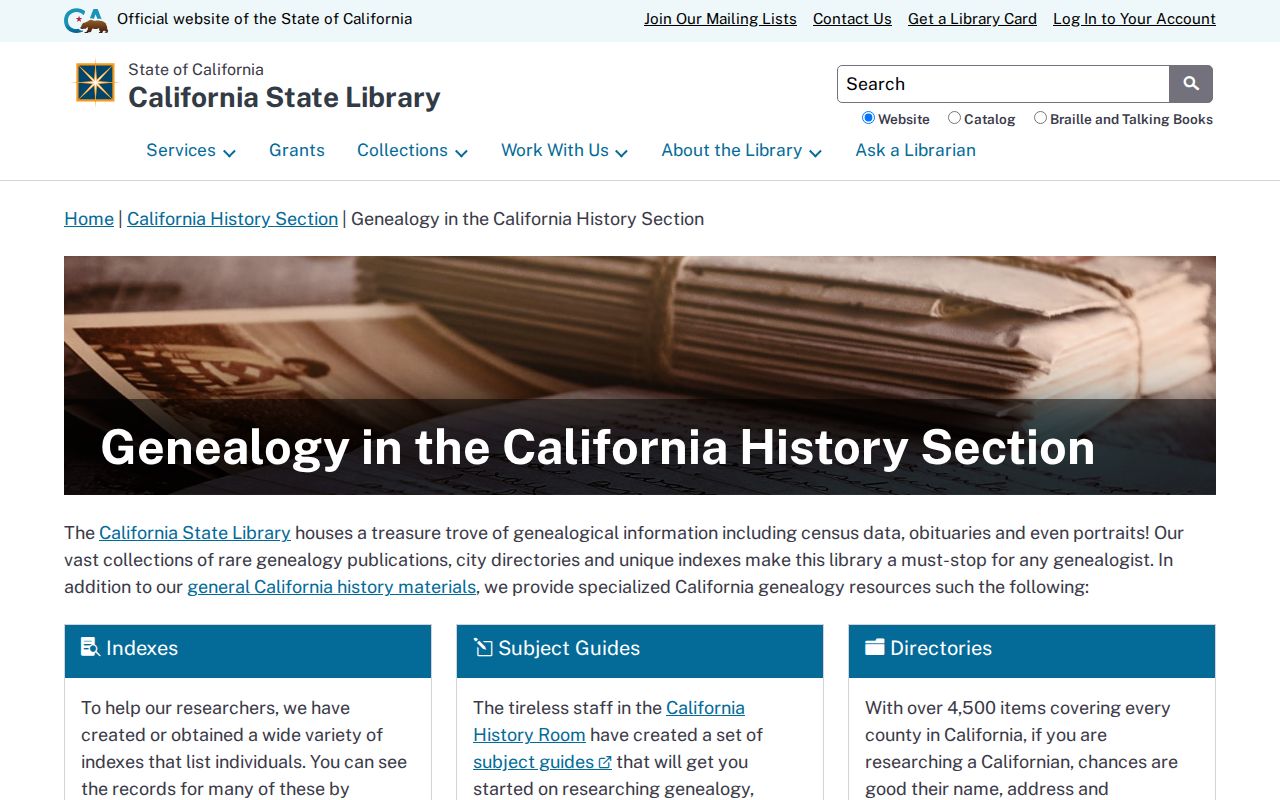
State catalog help can point to related formats and institutions, while the local town section remains the key check for an Imperial surname.
The National Archives census and research page is also the source route for its directory and census guidance.
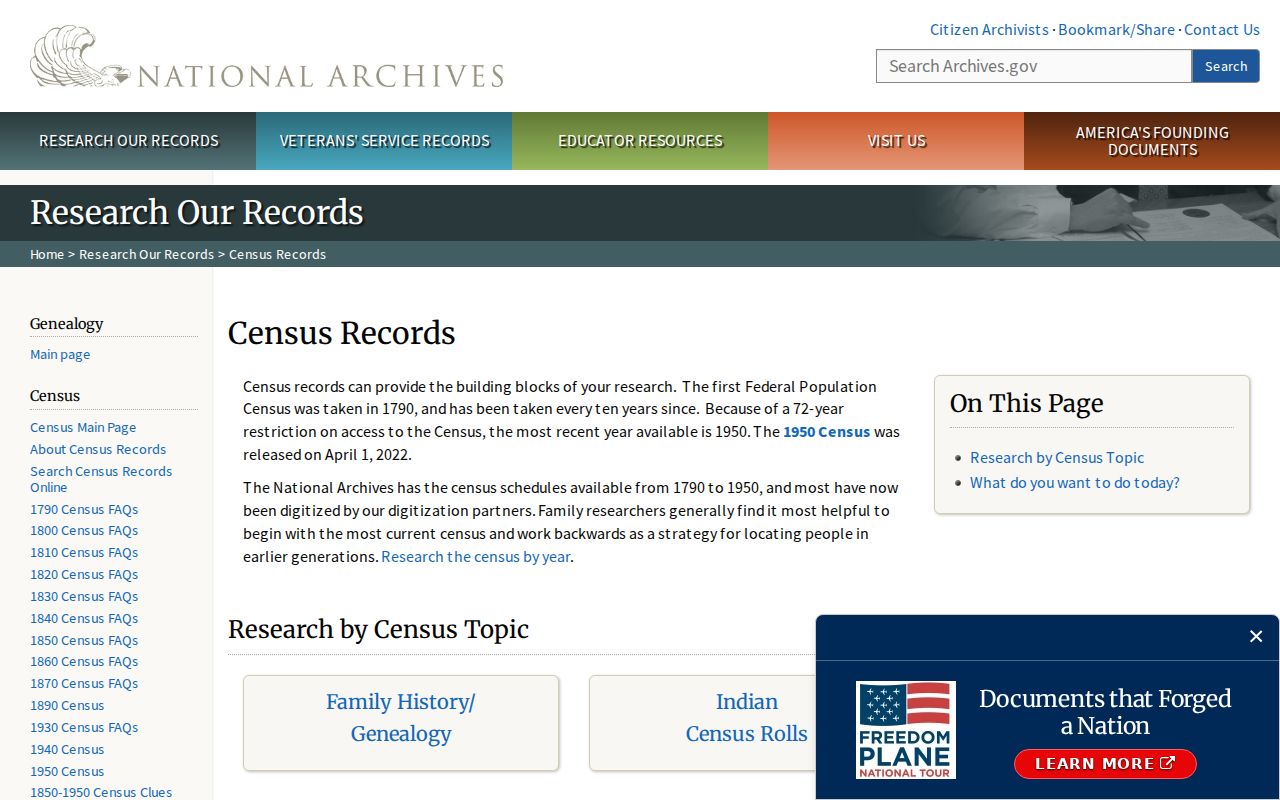
NARA's valley-wide scope is why a directory name must be paired with the town heading and, when possible, a census enumeration district or address.
How an Imperial Directory Entry Must Be Checked
No actual Imperial directory page image was inspected in the research run. The inventory below is therefore a checklist and declared gap, not an observation about any local page. Before describing how an entry reads, inspect a permitted FamilySearch or NARA image and record the exact marks used in that volume. Do not turn generic directory conventions into a claim about an Imperial household.
| Field to inspect | Status of the Imperial evidence |
|---|---|
| Name and spelling | Checklist only; copy the printed form and test initials, compound surnames, and variants. |
| Town section | Required check because the cataloged volumes cover several Imperial Valley towns. |
| Address or street | Checklist only; do not claim that an address field was seen until the page is inspected. |
| Occupation or employer mark | Checklist only; record abbreviations and do not expand an abbreviation without the key. |
| Spouse, owner, or renter notation | Checklist only; local symbols and wording remain unverified. |
| Neighboring entries | Compare adjacent lines only after the image and section are confirmed. |
- Criss-cross directory
- A reverse address or street index that may lead from a place to a person for a particular year.
- Householder index
- A name or household listing that points to a residence, but whose exact fields must be checked in the source volume.
- Abbreviation key
- The publisher's explanation of short forms and symbols used in entries; it should be read before transcription.
The missing image check is a meaningful research boundary. An entry that is absent could reflect an omitted household, rural delivery, spelling, migration, death, or a gap between volumes. Absence alone does not establish that a person left Imperial.
Trace Families Through Imperial City Directories
A city directory becomes more useful when it is paired with a census checkpoint. The 1908 volume sits just before the 1910 census. The 1910-1911 run can be read with 1910. The 1918-1921 group surrounds the 1920 census, and the 1928-1930 group sits near 1930. The 1940 census is a later comparison, and the 1950 census is the latest open population census as of 2026 because census records open after 72 years. A later yearbook or newspaper can fill a social or school gap, but it is not a household directory.
Use a small worksheet rather than a loose name list.
- Write the directory title, publisher, town section, year, reel or DGS group, and an exact transcription only after checking the image.
- Copy the abbreviation-key meaning and note the street, number, spouse mark, occupation, and neighboring entries if the local page shows them.
- Record the census year, enumeration district, page or line, household order, ages, relationships, and address when available.
- Compare the next directory checkpoint and mark a move, name variation, household change, or missing volume as a question for further records.
- Check probate, obituary, newspaper, or neighboring-town sources before treating a disappearance as death or departure.
The method is strongest for family history and former-classmate work because it uses dated context. It is not a way to state a current address. For current parcel evidence, use the by-street sources rather than expanding the historical collection beyond what its pages show.
Imperial Library's Directory Research Route
Imperial Public Library, 200 W. 9th St., lists phone (760) 355-1332 and hours Monday through Thursday 10 a.m. to 7 p.m. and Friday 8 a.m. to 5 p.m. In-library Ancestry Library Edition includes federal census, AGBI, and Passenger and Immigration Lists Index material. The library also lists LINK+, a useful interlibrary-loan fallback that commonly takes one to two weeks. Imperial County residents can obtain a card with ID and current-address evidence. Black-and-white copies are listed at $0.15 per page; color and fax service at $0.30.
The library's public pages do not state an exact printed Imperial city-directory shelf, reverse-directory run, obituary index, or newspaper-microfilm inventory. Ask for the title, publisher, year, town section, and format rather than asking for a broad list of who lived in town. If the library does not hold a needed volume, LINK+ or the California State Library catalog may point to another institution.
The library's building history explains why shelf continuity should be checked. Andrew Carnegie offered $10,000 in 1909 if the community supplied a site and ongoing support. The first library building at 9th and G was destroyed in the 1940 Imperial Valley earthquake. Service continued in temporary quarters until the current building at 200 W. 9th opened in 1953. That history does not prove that any directory or archive was lost. It is a reason to ask where older material was transferred.
The City of Imperial staff directory is a current professional contact source, not a historical city directory.
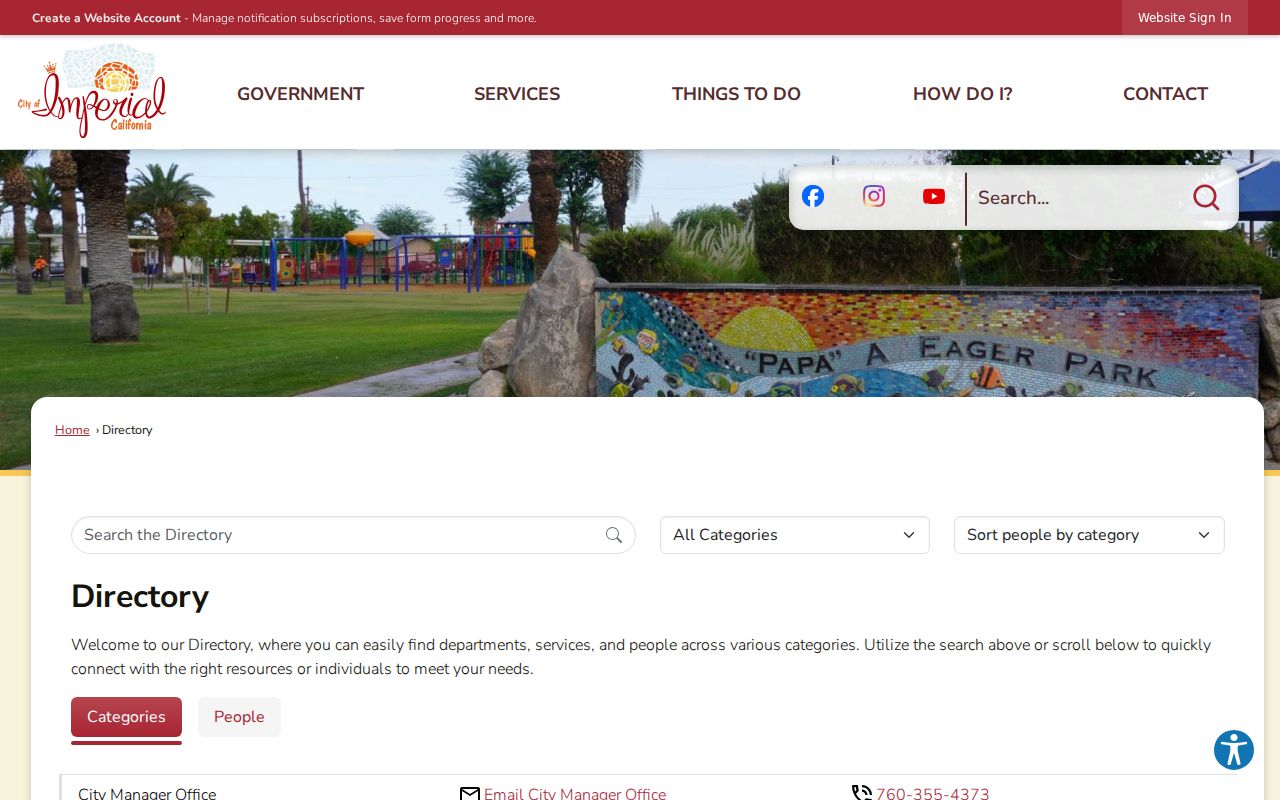
The distinction keeps a current department listing from being mistaken for a resident collection. City staff records can help route a public-record question, but they do not replace the verified historical runs.
Imperial IVC Yearbooks Extend the Directory Trail
Imperial Valley College Spencer Library Special Collections holds supervised in-house yearbooks from 1923-1966, student newspapers from 1968-2005, catalogs from 1922 to the present, scrapbooks from 1955-1994, microfilm, the Imperial Valley Press, and local-history collections. Reference contacts listed in the research are (760) 457-2059 and library.reference@imperial.edu; the main library contact is (760) 355-1163 and library@imperial.edu. These materials can identify students, groups, courses, and campus ties after the verified directory run, but they are category-specific sources rather than household directories.
The Imperial County Historical Society and Pioneers' Museum preserves early settlers' life histories, documents, newspapers, letters, photographs, and subject collections. Research-library use is by appointment, with a stated $25 fee and another $25 potentially charged for each added hour. A focused inquiry should include surname variants, an approximate time, town, occupation or organization, and the material type sought. The archive is person-centered, but it is not a public resident roll.
These later sources are helpful when a directory year is missing or when a former classmate is the research goal. Preserve the difference in the worksheet: yearbook entry, newspaper item, museum life history, and directory entry each carry a different kind of evidence.
Limits of an Imperial City Directory
An Imperial city directory is a historical finding aid, not a complete census and not a current resident list. Valley-wide scope can put several towns in one volume. A missing year can hide a move, a spelling change, a rural delivery pattern, an omitted listing, or simple gaps in preservation. A catalog title proves the run, while only an inspected image can prove the printed entry. A yearbook or obituary adds a human clue but does not turn into a deed or a current address.
For a modern address, use the Imperial by-street records workflow and keep the historical volume as a dated comparison. For a single person, verify a directory hit through independent records such as a court index, probate file, business filing, or official certificate route. A person in a directory may be an occupant, a business contact, or a person listed under a different town section, so the town header and record role matter.
Research boundary. The verified collection list is detailed, but no actual Imperial directory page was inspected. Treat every sample-entry field as a check to perform, not as a local fact already observed.
A careful city directory search ends with a citation: title, year, publisher, town section, reel or DGS group, page or image, exact transcription, and the next record used for confirmation. That trail makes the result useful to family historians without overstating what the collection can show.