
Search the Imperial Residents Directory
Imperial has no single public book of every household. A useful search starts by matching the clue to the record keeper. An address belongs first with the Imperial County Assessor, its parcel map, or the city GIS layer. A name may be useful in RecorderWorks, a court index, a business filing, or a professional-license search. A past household belongs on the historical shelf, where directory volumes and census releases can add dates that current rolls cannot.
Each result answers a narrower question. An assessor record ties a parcel to an assessment and may show a tax-mailing destination. A deed index shows an indexed party role, not proof of occupancy. The voter-status tool confirms a person’s own registration details. City permits show a dated applicant or project address. Household members who do not appear in an ownership, civic, professional, or historical record will not be recovered by an official search.
- Write down the exact name, former surname, address, town label, or time period you already know.
- Use an address or APN with the county assessor and map layers before trying to identify an indexed party.
- Search RecorderWorks by name, document type, date, parcel, or document number, then read the party role.
- Use the appropriate court, vital, voter, license, or business source for the question rather than treating one result as a full profile.
- Move to the library, archives, custodian counter, or a focused CPRA request when the online screen ends.
That sequence keeps a resident lookup tied to a dated record. It also separates a current clue from a historical one, which is essential when a parcel has changed hands.
Imperial Resident Records Offices
Imperial is in Imperial County, while El Centro is the county seat. The county offices that hold title, assessment, tax, election, and certificate records are in El Centro. City Hall adds legislative files, permits, code matters, and staff contacts. These offices do not maintain an all-purpose residents directory, but each preserves a different piece of a person, parcel, or public role.
Imperial County Clerk-Recorder
940 W. Main St., Suite 202
El Centro, CA 92243
(442) 265-1075
Imperial County Assessor
940 W. Main St., Suite 115
El Centro, CA 92243
(442) 265-1300
Imperial County Registrar of Voters
940 W. Main St., Suite 206
El Centro, CA 92243
(442) 265-1060
The Imperial County Clerk-Recorder services page is the office-level source for recorded documents, certificates, and copy procedures.
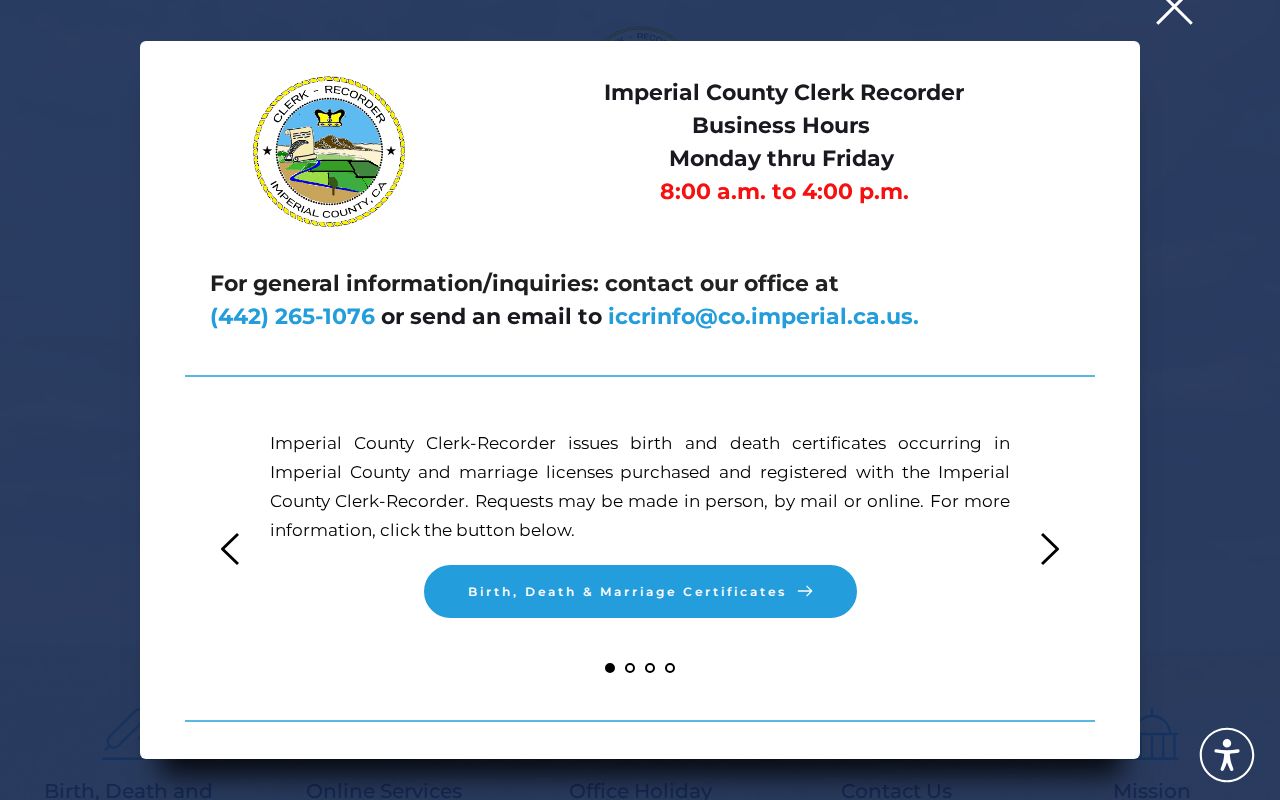
The recorder image anchors the office geography behind the online index. It also points to the counter and certificate routes used when a web result is too narrow.
The recorder’s counter supports older indexes and document viewing. The assessor routes questions by division, including mapping, transfers, building records, and exemptions. Elections staff explain the lawful process for released voter data. The custodian remains the place to verify any name, date, role, or address.
To see how a parcel becomes a street-level trail, use the Imperial street directory by address. A one-person question belongs in the Imperial resident lookup, where court, vital, and license limits are kept distinct.
Why Imperial Property Search Starts With an Address
The county’s public property path is address-first. The Property Value Notification instructions accept a street number and street name or an APN. ParcelQuest Lite, reached through the assessor’s page after an external-host agreement, also searches by physical address or parcel number. An owner-name internet search is not offered. The restriction reflects California rules protecting certain home-address information, so a name-only search cannot replace a parcel clue.
Search the physical site, record the APN, and note the assessment date. A result can show the parcel or situs, assessment components, net assessment, and basic map or property characteristics. A taxpayer mailing address is a separate field. It may point to a different destination, but it does not prove that the owner lives at the parcel.
| Assessor field | What to enter or expect |
|---|---|
| APN / parcel identification number | Use the county parcel key when known. |
| Physical address | Enter the street number and street name. |
| Owner name | Unavailable in the county public internet search. |
| Value notice result | Open the underlined assessment number to view or print the notice. |
See the Assessor’s address-search directions before using a result as a clue.
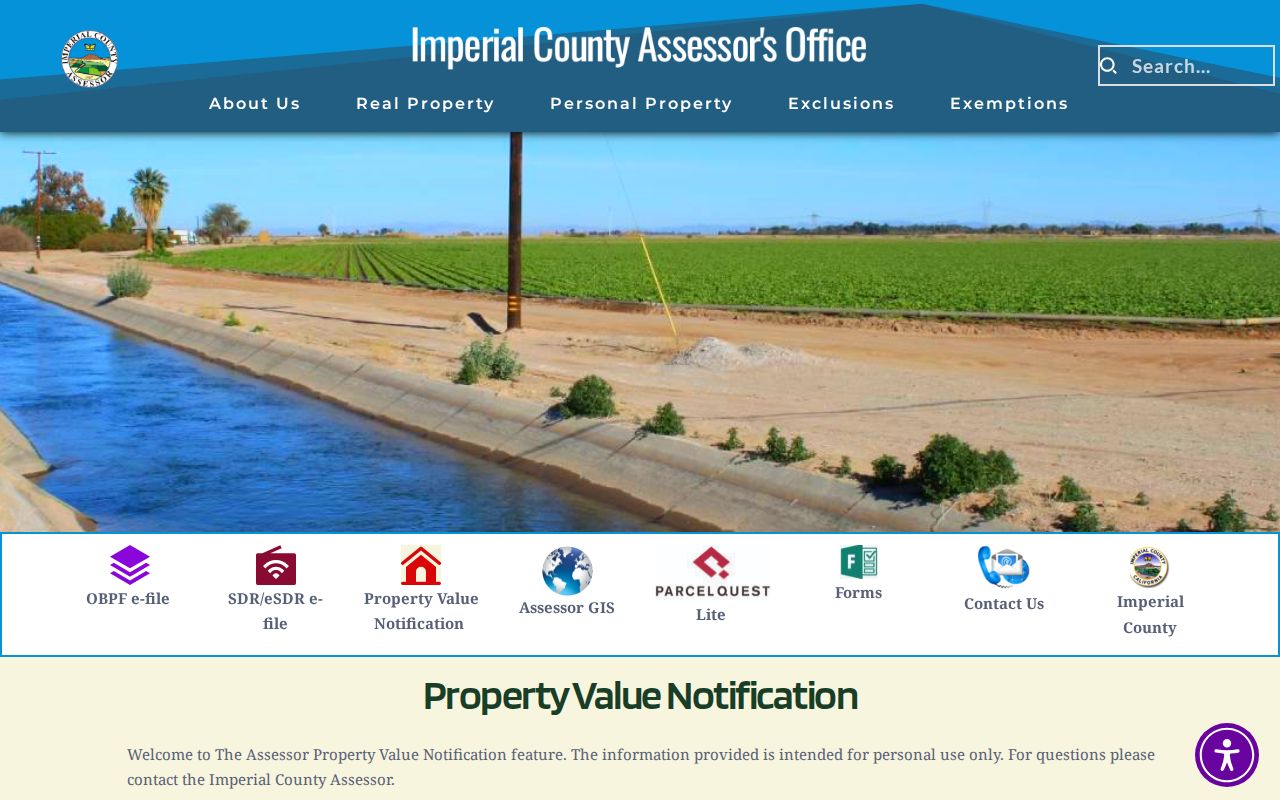
The assessor screenshot shows the public entry path and its name-search boundary. It belongs beside an address workflow, not beside a claim that the roll lists every Imperial resident.
Note: Date every captured value notice because the public assessor display may show an older assessment snapshot.
RecorderWorks and the Imperial Deed Trail
RecorderWorks is the county’s indexed property-record route from January 2, 1986 forward. Its Name mode accepts LAST, FIRST, a partial first name, a business name, or a fractional name such as smith, a. Partial matching can broaden the results. Document Number, Document Type, Recording Date, Parcel Number, and map modes offer different ways to narrow the same trail.
A document-number result opens the indexed detail. A party-name link launches another search for documents connected to that indexed name, ordered by document type and recording date. The result can include a document number, recording date, type, party entries and roles, and parcel or book-page information when indexed. The index is not a current-title certification. Read the underlying document or order a copy when the role matters.
- Name mode
- Last name, partial first name, or business name narrows the indexed party trail.
- Document type and dates
- A type plus a recording-date interval narrows deeds, liens, maps, affidavits, leases, and other filings.
- Parcel number
- An APN finds instruments carrying the parcel field.
- Document number
- A full number beginning with its four-digit year finds one known record.
The RecorderWorks search screen is the fastest online bridge from an Imperial name or APN to an indexed instrument.
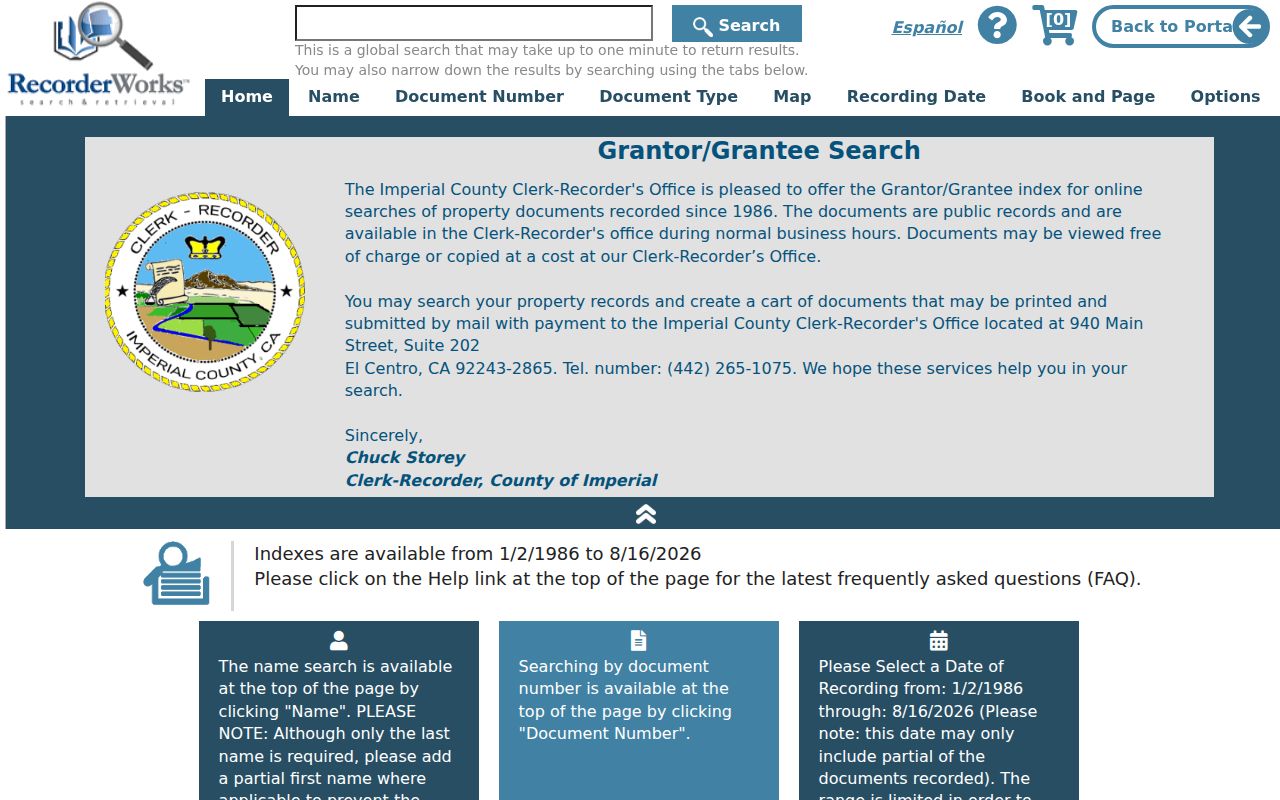
The image highlights the search axes that matter when a common name produces too many rows. Older indexes remain at the Clerk-Recorder counter, and the office does not conduct the chain for a requester.
California Voter Status for Imperial Searches
California My Voter Status is a self-lookup. It asks for first and last name, birth date, a California driver license or ID number unless the user marks that option unavailable, the last four Social Security number unless unavailable, and reCAPTCHA. Results can show registration status and location, party and language preference, polling place, county contact, election information, and ballot status. It is not a public name or street roll.
- Name, birth date, and ID fields
- They match the person checking their own status, with “I do not have” choices for some fields.
- Registration result
- Status, location, polling place, districts, ballot information, and county contact may appear.
- County voter file
- A separate application requires a permitted statutory purpose and restrictions.
Use the California voter-status tool for a personal check. The Imperial Registrar at Suite 206 can explain a lawful data request, but casual curiosity does not authorize a block-by-block list.
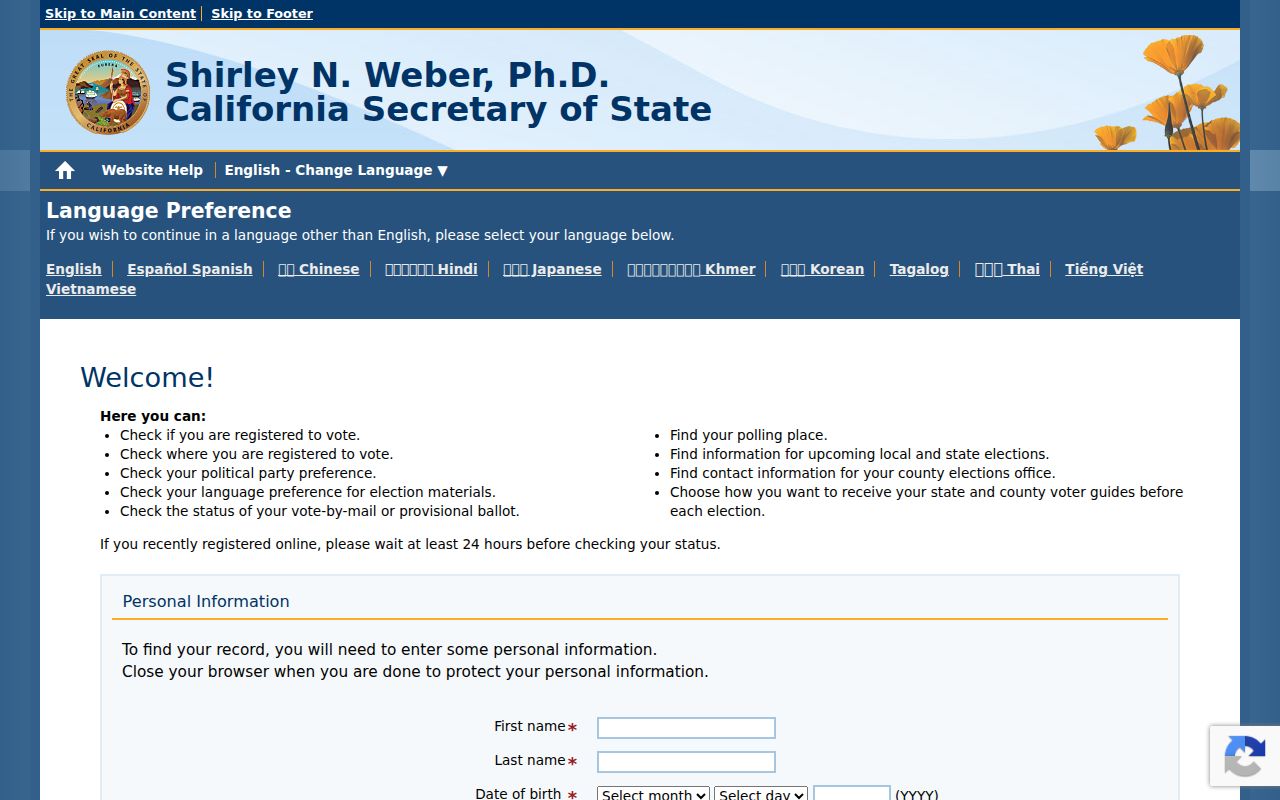
The voter screenshot shows why the result is tied to the person who supplies matching information. Elections Code section 2194 and Government Code section 7924.000 limit use, while section 18109 makes knowing unauthorized use a misdemeanor.
Lawful use. Public records are for personal, lawful research and civic transparency. Do not use a result to stalk, harass, threaten, intimidate, or harm another person.
Current Imperial Resident Directories
Current Imperial residents directory sources are partial by design. The following table distinguishes an owner clue from a registration result, a recorded party, and a public professional role. None should be read as a complete household count. A person may be absent, listed at an old date, or represented only through a business or civic filing.
| Source | Who or what appears | Keeper | Access boundary |
|---|---|---|---|
| Property Value Notification / ParcelQuest Lite | Parcel, situs, assessment, some characteristics | Imperial County Assessor | Address or APN; no owner-name internet search |
| RecorderWorks | Indexed parties, documents, dates, roles | Clerk-Recorder | Free index from 01/02/1986; copies or older indexes through office |
| My Voter Status | One person’s status, location, districts, ballot details | California Secretary of State | Personal self-lookup |
| City staff directory | Professional city contacts by category and name | City of Imperial | Public role, not a household roll |
| DCA and bizfile searches | License or entity roles, status, and public address fields | California agencies | Business or professional evidence, not residence proof |
| Route | Strength | Limit |
|---|---|---|
| Official Imperial custodian | Named record, access rule, date, and correction path | Each source answers only its own record question |
| Commercial people-finder category | May combine clues across public and commercial data | Can charge, lag corrections, merge same-name people, and omit protected records |
The right next source depends on the question. For a current parcel relationship, use the assessor and deed index. For a public role, use a staff, license, or business record. For one person, compare independent records before relying on a match.
Imperial City Hall Records and Permit Trails
The City Clerk at 420 South Imperial Avenue keeps agendas, minutes, ordinances, resolutions, the municipal code, election materials, board and commission appointments, bid records, and FPPC filings. Those files can identify an applicant, speaker, vendor, official, or property owner when that person joins a city process. They do not form a household register.
A focused City of Imperial CPRA request should name an existing record, date span, address, APN, project, complaint, permit, or council action. The form asks for the request date, requester contact information, a detailed description, and signature. Submit by email, fax at (760) 457-7088, or mail to the City Clerk. The city states a 10-day determination period with a possible 14-day extension. Citizenserve handles planning, building, engineering, encroachment, zoning verification, and code-enforcement applications. Monthly Building Permit Reports chiefly cover 2019 through 2022.
Ask for a permit card, inspection history, or retained case record rather than asking the clerk to create a list of residents. The City Clerk’s records page and the Citizenserve portal identify the proper channel.
Note: A permit applicant or contractor is evidence of a dated role at a project address, not proof of residence.
Imperial Court Names and Case Numbers
Imperial Superior Court covers civil, criminal, family, probate, small-claims, and traffic matters. The public ROA and case lookup is case-number based. A paid Named Record Search requires an account and prepayment and returns only matching case numbers and filing dates. California Rule of Court 2.507 prevents public party searching by birth date or driver-license number. Confidential, sealed, juvenile, adoption, mental-health, and other protected material remains unavailable.
- Public ROA / case lookup
- Uses a case number for permissible public case material.
- Named Record Search
- Uses a party name after account setup and prepayment; returns case number and filing date only, and a charge can apply to zero results.
- Document Search
- Uses an authenticated account for permissible public filings from November 2017, with the most recent 150 shown.
- PACER
- Provides federal or national searching; the Southern District of California covers Imperial County.
Use a case number to inspect permissible filings, then read the party role and filing date. The Imperial court online-services page is the official starting point.
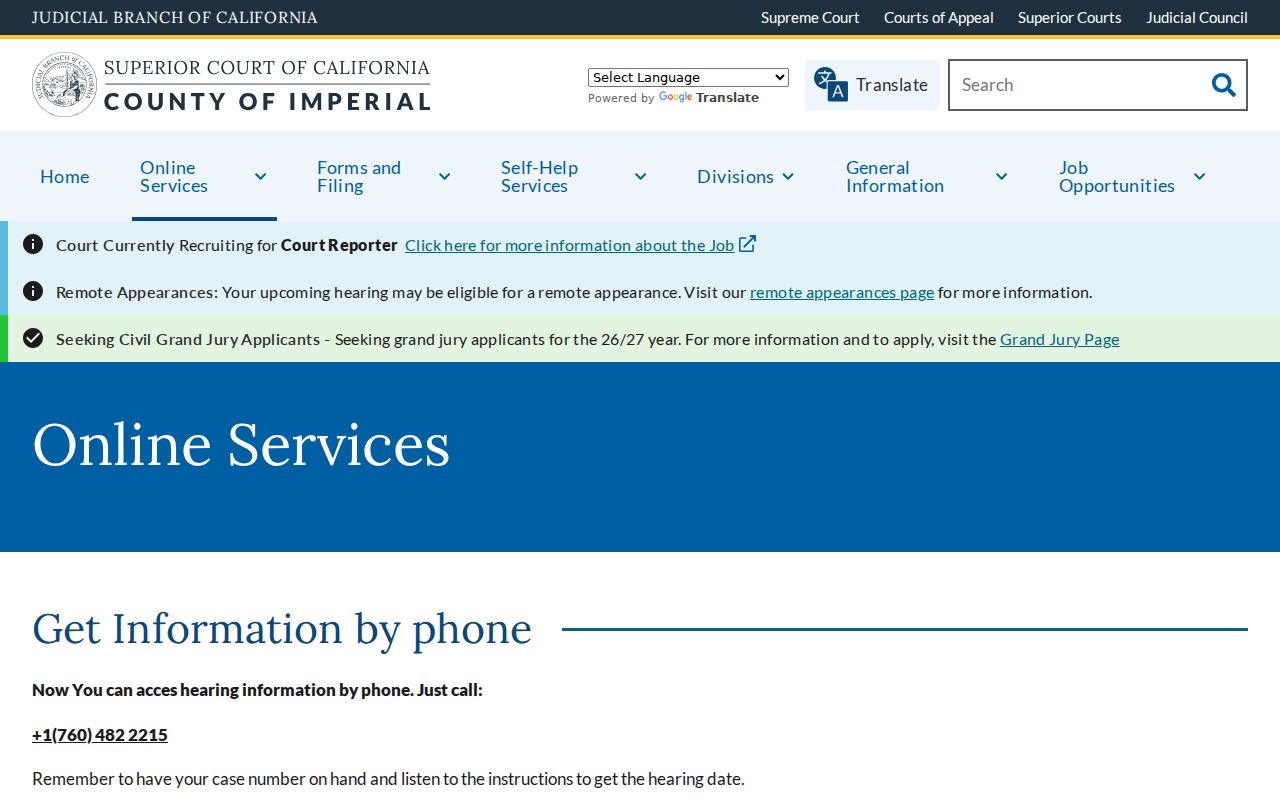
The court image points to the case-access route, not a promise that a name search will reveal a person’s address or disposition. For federal records, PACER charges $0.10 per page and $2.40 per audio file, with quarterly charges of $30 or less waived.
Imperial Vital Records and Certificate Choices
The Clerk-Recorder issues certificates for births and deaths occurring in Imperial County and marriages purchased or registered there. County mail requests go to Suite 202 in El Centro. Authorized-copy requests require the signed sworn statement and notarization; informational copies are the broader route and carry a notice that they are not valid identity documents. Confidential marriage copies are limited by Family Code section 509.
For 2026, the county lists birth at $34, death at $26, and marriage at $19. CDPH Vital Records provides statewide birth and death records from July 1905 and statewide marriage data, with its own fees and processing rules. A no-record result keeps the search fee. A certificate or index establishes an event, date, place, or family relationship; it does not alone prove that a living person now resides in Imperial.
- Birth, death, or local marriage event
- Imperial County Clerk-Recorder.
- Statewide certificate search
- California Department of Public Health, Vital Records.
- Divorce decree
- The court that holds the file; a CDPH abstract covers only a limited period.
Imperial Business and License Records
Sometimes a resident clue is a public role rather than a home record. California bizfile searches an entity by name or number and can return status, jurisdiction, street or mailing address, service agent, and filing routes. A county fictitious-business-name filing can show a trade name, registrant identity or type, and business mailing location. Since 2024, the county form uses a business mailing address rather than a residential address.
The Department of Consumer Affairs search adds board, license type, license number, status, issue and expiration dates, public address, and discipline fields. These records can disambiguate a common name when the occupation or entity is already known. They describe a business or professional role as of a filing date, not a current household.
- California bizfile
- Entity name, status, agent, and filing address describe an organization role.
- DCA License Search
- License number, status, dates, public address, and discipline describe a professional credential.
- Imperial FBN search
- Trade name, registrant, file number, and mailing location describe a dated business filing.
The California business search and DCA license search are useful comparison points for a name that also appears in a deed or court index.
The business-search image shows a role-based lookup. Pair it with the county FBN record when the trade name and person need to be reconciled.
The California Department of Consumer Affairs license search is the source for the professional credential route shown here.
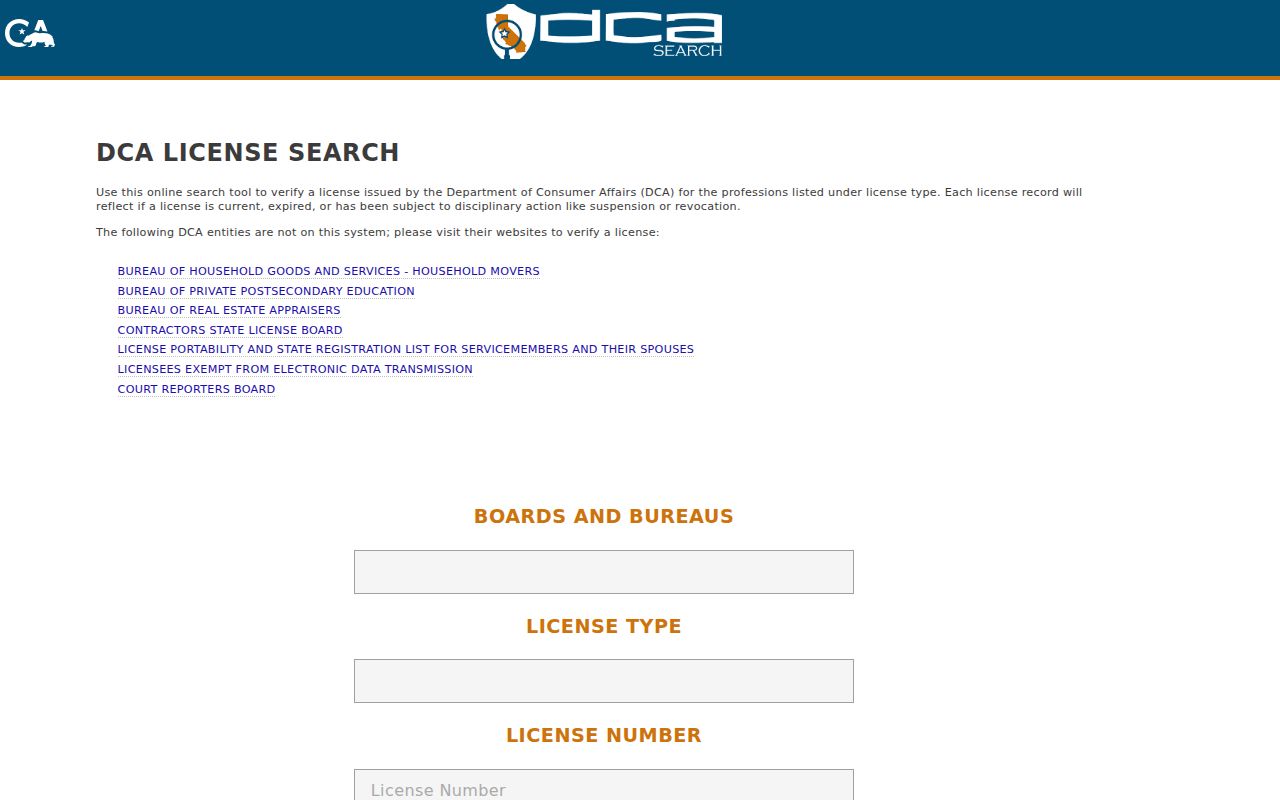
The license-search image belongs to a credential check, not a claim that the public address is a residence.
Imperial Library and Valley Memory
Imperial Public Library, 200 W. 9th Street, offers in-library Ancestry Library Edition, LINK+, and local-history help. It is open Monday through Thursday from 10 a.m. to 7 p.m. and Friday from 8 a.m. to 5 p.m. Imperial County residents can obtain a card with identification and current-address evidence. Black-and-white copies are $0.15 per page; LINK+ commonly takes one to two weeks.
Imperial Valley College Spencer Library Special Collections holds supervised yearbooks from 1923 through 1966, student newspapers from 1968 through 2005, catalogs from 1922 forward, scrapbooks, microfilm, and local history. The Pioneers’ Museum research library works by appointment and states a $25 fee, with another $25 potentially charged for each extra hour. These resources are valuable for former classmates and family history, but they are not verified public household rolls.
The library’s own story supplies context. Carnegie offered $10,000 in 1909, the first building was destroyed in the 1940 Imperial Valley earthquake, temporary quarters followed, and the building at 200 W. 9th opened in 1953. That history does not prove that a particular residents directory record was lost. Ask where early material was transferred before assuming a gap reflects destruction.
Protected Addresses in an Imperial Resident Lookup
California’s Safe at Home program gives qualifying threatened or victimized people a substitute mailing address, mail forwarding, service-of-process agency, and confidential voter registration. It does not change identity, force private acceptance, or erase a parcel’s legal description. The CCPA and the state DROP system address covered data brokers, but broker deletion does not remove deeds, court files, or other records held by a government custodian.
When an expected name is absent, consider protection, redaction, an old record date, a changed surname, a business-only role, or a record held by a different office. Do not fill the gap with deliveries, utility accounts, street imagery, or other private data. Use the custodian’s correction, access, or focused request channel.
Note: A missing result is an access clue, not evidence that a person has left Imperial or never lived there.
Imperial Search Fallbacks When Portals Stop
Online tools have different cutoffs. RecorderWorks begins on January 2, 1986. Court document downloads begin in November 2017. City permit reports chiefly cover 2019 through 2022. A failed screen therefore does not mean the record never existed. Carry the exact name, address, APN, document number, case number, date range, or legal description to the office that owns the next layer.
For a deed or map, view the public index or older books at the Clerk-Recorder counter and use the official copy form once the document or book-page is known. For a permit, name the project address and interval in Citizenserve or a City Clerk request. For a court file, ask the clerk about an older permissible digitized document. For a historical household, use a residents directory volume alongside a census and ask the library, IVC, museum, State Archives, FamilySearch, or NARA for the exact reel, town section, and page.
- Roll
- A custodian’s organized list, such as an assessment or voter record, with its own access rules.
- Index
- A finding aid that points to a record; it may not contain the full image or prove the latest fact.
- Parcel
- A legally mapped piece of land identified by an APN, legal description, or map reference.
- Criss-cross directory
- A reverse-style directory that may connect an address or telephone subscriber to a name, if a local run is confirmed.
Historical Imperial Resident Directories
FamilySearch catalog 1038130 preserves a verified Imperial Valley run on three 35mm reels. The volumes include 1908, 1910 to 1911, 1914 to 1915, 1917 to 1918, 1918 to 1919, 1920 to 1921, 1924, 1926, 1928, and 1930 directories. Publishers move from the Imperial Valley City and County Directory Company to Albert G. Thurston, Western Directory Company, and Los Angeles Directory Company. NARA also identifies circa-1930 holdings.
Those city directories cover Imperial alongside Brawley, Calexico, El Centro, Holtville, Heber, Niland, Westmoreland, and other valley communities. Establish the Imperial town section before treating a surname as local. The Imperial city directory collections deserve a full shelf-by-shelf treatment in the Imperial city directories archive. A directory year can place a household near a date, but it should be paired with a census, obituary, deed, or other record.