
Imperial Neighbors by Record Type
The Imperial block record is assembled from sources with different purposes. The zoning map establishes the street segment and distinguishes the city line from the sphere. The Geo Viewer shows parcels and APNs. The assessor supplies one parcel's situs and assessment evidence. RecorderWorks adds recorded party roles from the available index. Permits show a dated city project. Voter information is controlled, and a civic or HOA source may show an organization without showing every household.
| Source | What It Shows About a Block | Access |
|---|---|---|
| 2023 Imperial zoning map | Named streets, city limit, sphere of influence, zoning, and development context | PDF map |
| Assessor Front Desk Geo Viewer | Parcel outlines, APNs, and physical adjacency when clicked live | Free launch page |
| Property Value Notification or ParcelQuest Lite | One parcel's situs, assessment, and basic characteristics through an address or APN | Address or APN search |
| RecorderWorks | Recorded parties, document roles, transfers, maps, and dates tied to an index search | Online from 01/02/1986; older indexes at the counter |
| Permit reports or Citizenserve | Project address, work description, applicant, contractor, or owner role at a city process date | Reports, portal, or focused CPRA request |
| Voter status or Registrar | A person's registration status and districts, or lawfully released file fields | Self-lookup or permitted-purpose request |
| Civic and HOA sources | Published organization contacts or voluntary civic roles, not a complete block roster | Ask the named office or organization |
The table does not promise a complete nearby-household list. A parcel owner may receive mail elsewhere, a recorded party may have a role unrelated to occupancy, and people in the household may not appear in the property roll. The result of a parcel walk is adjacent-parcel and owner evidence. It is not a list of everyone living on an Imperial block.
Click Imperial Adjacent Parcels
The safest block lookup uses the 2023 zoning map for geography and the Assessor Geo Viewer for parcel clicks. The live viewer is dynamic, and the research did not verify a public buffer, radius, or export control. Treat each click as a separate parcel check rather than drawing a promised circle around a home.
Process flow: known address, city line and street segment, subject parcel, APN, touching parcels, assessor rerun, recorded-party check, dated notes.
- Open the City GIS Services material and the 2023 zoning map. Mark whether the address sits inside the city line, in the sphere of influence, or outside both, and note the street segment.
- Open the Assessor Front Desk Geo Viewer, zoom and pan to the subject parcel, and click it. Capture the APN and the date of the map view.
- Click each parcel that physically touches the subject parcel. Copy each APN one by one. Do not assume the next parcel is included because it looks close on screen.
- Rerun every captured APN through the assessor's public address or parcel workflow. Record situs, assessment details, and any mailing distinction without turning it into a household claim.
- Use RecorderWorks for a recorded party or transfer question, and use a focused city request for a known permit or retained file. Stop when the source no longer answers the question.
When the question expands from the immediate block to a whole named street, move to the Imperial by-street address directory. That separate route owns the full street sequence rather than the adjacent-parcel method.
Imperial City Line Shapes Neighbors
Imperial's city limit and sphere of influence are not the same line. The zoning map shows both, along with streets and land-use areas such as residential, planned-unit, commercial, industrial, mobile-home park, and public-facility zones. A postal city label or development name cannot settle which government holds a record. Use the city map for jurisdictional context, then use the county parcel source for the land record.
Barioni Lakes, Encanto Estates, Springfield, Morningside, McFarland Ranch, and Sanchez Ranch appear as local planning or development labels. They help orient a map click. They are not verified active associations, HOA member lists, or a promise that every nearby parcel belongs to the same organization. Ask Planning or Community Development about a named tract when a subdivision document is the real question.
Note: A map label can locate a block, but only a custodian's record can establish the scope of a subdivision or organization.
Imperial Owners Are Not All Neighbors
The assessor's record centers on a parcel, not on a household. Situs identifies the land or building. A mailing address identifies where a tax notice goes. The APN bridges those fields to a map and tax record. A different mailing address may suggest an absentee taxpayer, but it does not prove where that person resides. A deed party may be a grantor, grantee, trustee, lien claimant, or another role, and none of those labels alone establishes occupancy.
Household members who do not hold a recorded interest may be absent from the property roll. Utilities, deliveries, DMV files, and private account data are not substitutes for a public source. The block method should therefore report what each parcel record shows, date the result, and say when the record cannot answer who is physically present.
Imperial Neighbors Cannot Be Browsed
California's My Voter Status tool is a self-lookup for the person supplying matching information. Its form asks for first name, last name, date of birth, a driver license or state ID choice, the last four digits of a Social Security number or the no-number choice, and a captcha. Results can include registration status and location, party and language preference, polling place, districts, election information, county contact, and ballot status. It is not a public list of an Imperial block by street.
The California voter status lookup shows the self-service route for one person.
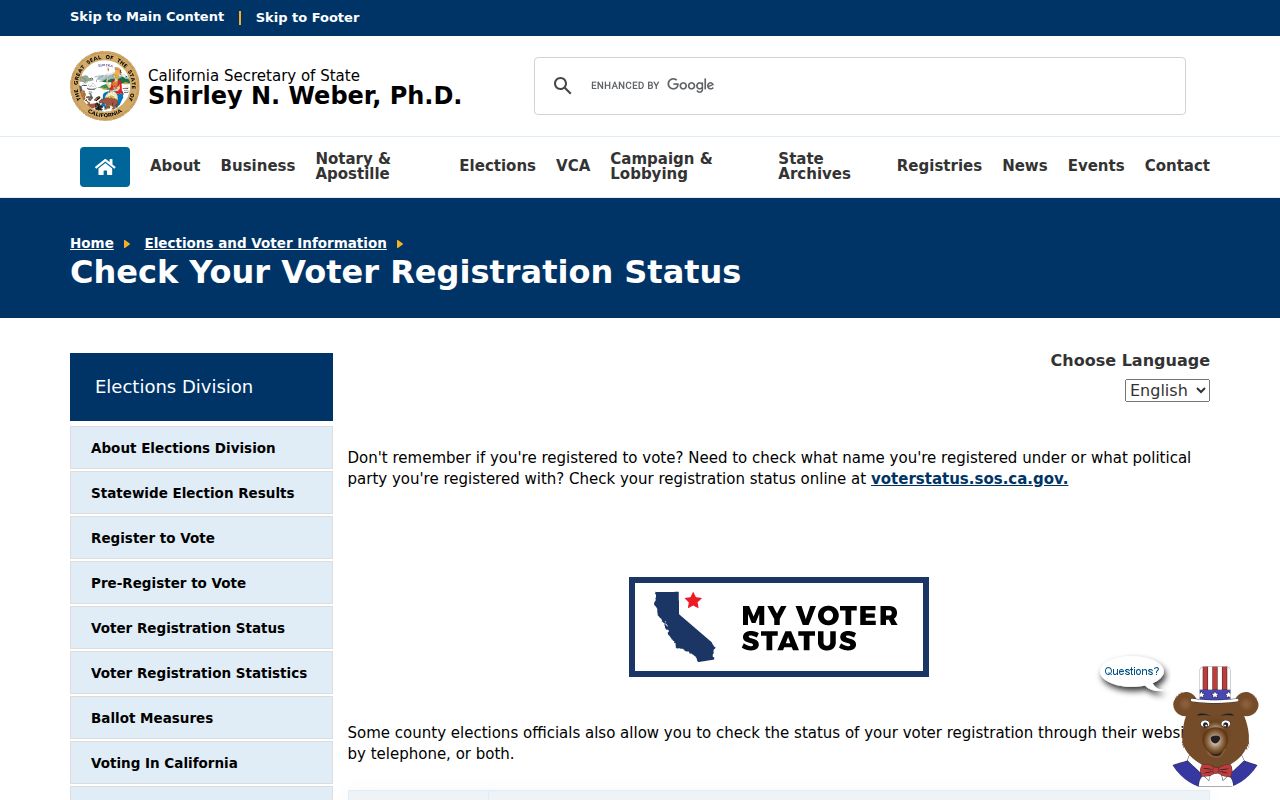
The image connects an Imperial block question to the proper state tool without implying that a neighbor can be enumerated. The Imperial Registrar administers the local file at 940 W. Main Street, Suite 206, El Centro, and lists (442) 265-1060 with weekday hours of 8 a.m. to 5 p.m., closed from noon to 1 p.m.
California's voter-registration access rules explain the separate file-request path.
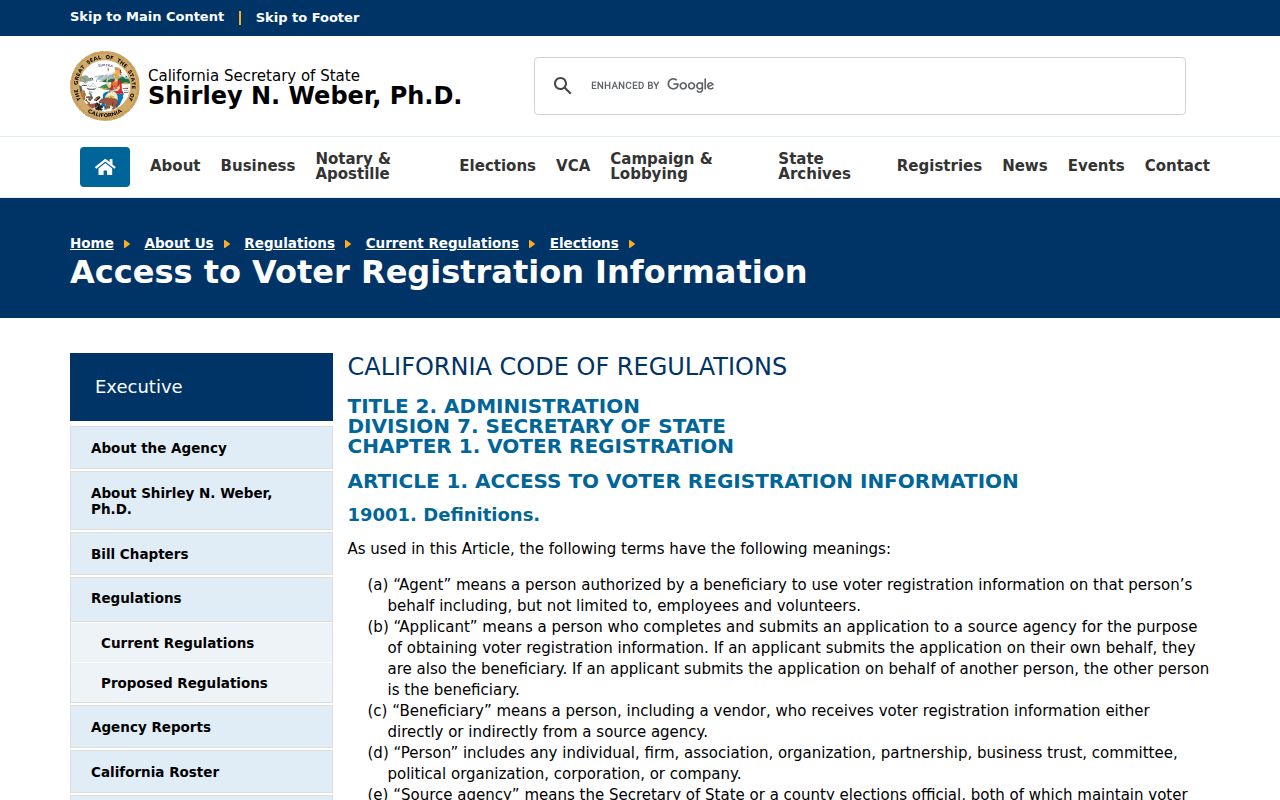
A written file application must identify the applicant, beneficiary, geographic scope, delivery, and permitted statutory purpose. Personal curiosity, solicitation, marketing, and harassment are excluded. Lawfully released fields may include residence or mailing address, precinct, status, and participation history, while signatures, unique identifiers, and protected voter details are excluded. Election Code section 18109 makes knowing unauthorized use a misdemeanor.
Imperial Neighbor Permit Records
Permits add a dated activity layer to an Imperial block. Citizenserve handles planning, building, engineering, encroachment, zoning-verification, and code-enforcement applications. The city's monthly Building Permit Reports cover much of 2019 to 2022, with some missing months visible in the published year lists. A report may identify an address, work description, valuation, applicant, contractor, or owner role. It does not establish that every person connected with the application lived there.
For an underlying application, issued permit, inspection card, status, or completion record, contact Community Development at (760) 355-1152 or ask the City Clerk for an identifiable retained record. A CPRA request can be sent by email to cityclerk@cityofimperial.org, through the newer imperial.ca.gov address listed by the clerk, by fax at (760) 457-7088, or by mail to the City Clerk, 420 S. Imperial Avenue. State the address or APN, record series, and date span. California's CPRA generally gives the agency 10 days for an initial determination, with a possible 14-day unusual-circumstances extension. The request should seek an existing file, not ask the city to compile a neighbor list.
The California Attorney General's CPRA guide explains the request principle and the distinction between inspection, copies, exemptions, and agency records.
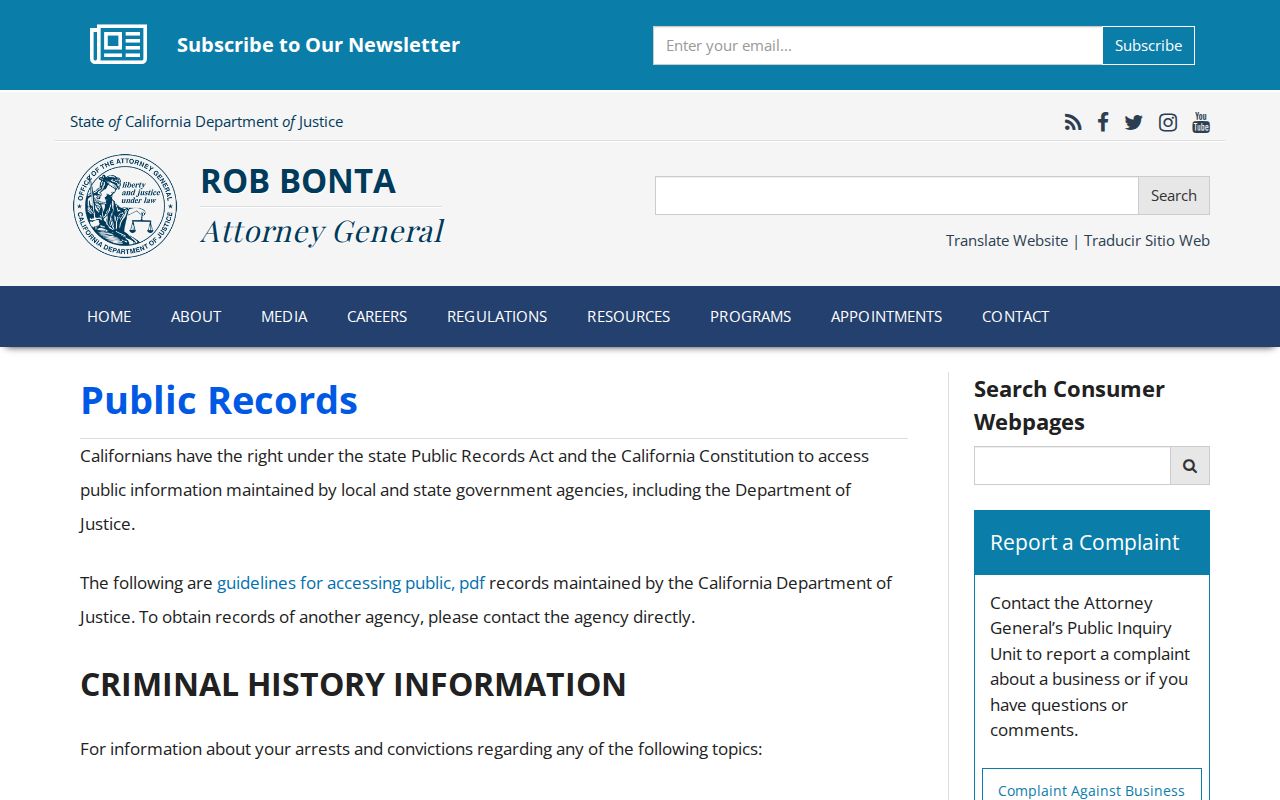
The CPRA image is a request aid, not a promise that a city file contains names or that every requested field is disclosable. Ask for an existing permit or code record tied to a known address and accept the custodian's redactions or exemption explanation.
Imperial Neighborhood Groups Have No Verified Directory
No official City of Imperial neighborhood-association umbrella or public HOA membership directory was located. A development label on the zoning map cannot be converted into a private roster. The practical contact table below points to offices that may hold organizational or civic material while stating what remains unknown.
| Contact point | Useful request | Limit to state plainly |
|---|---|---|
| Community Development, (760) 355-1152 | Ask about subdivision or HOA contact documents tied to a named tract | No verified public member roster or citywide umbrella directory |
| Imperial City Clerk, 420 S. Imperial Avenue, (760) 355-3334 | Agendas, minutes, appointments, or a focused CPRA request for an existing civic record | Civic rosters show public roles, not private membership |
| Imperial Public Library, 200 W. 9th Street, (760) 355-1332 | Local history, newspapers, yearbooks, and a reference inquiry | The public site does not verify a neighborhood or HOA directory |
| Pioneers' Museum research library | Appointment-based life histories, letters, photographs, and community collections | Its collections are research leads, not an active block membership roll |
Request organizational contact information, a recorded subdivision document, or a published civic roster when that is the real need. Do not ask a public office to expose private member information that it does not hold or publish.
Imperial Neighbor Records Compared
Official records and commercial compilation tools serve different purposes. The comparison is about source quality, not a recommendation to buy or use a particular service. An official record still needs date and role checks, while a commercial result can merge names, lag corrections, omit protected records, or charge for information that is not current.
| Category | Strength | Limits for an Imperial block lookup |
|---|---|---|
| Official parcel, recorder, permit, or voter source | Named custodian, defined fields, access rules, and a source date | One parcel or lawful purpose at a time; owners are not all occupants; protected data may be withheld |
| Commercial compilation tool category | May gather several public and commercial clues in one interface | May merge same-name people, lag corrections, charge fees, and lack a clear custodian or complete block boundary |
Use a commercial result only as an unverified lead if it is lawful to consult it. Confirm any important point through Imperial County, City of Imperial, California, or court records. Do not treat a compiled profile as proof that a person lives on a parcel or belongs to an organization.
Imperial Privacy Limits Protect Neighbors
Some Imperial neighbors will not appear in a parcel walk or voter result. California's Safe at Home program gives eligible participants a confidential address route through an enrolling agency. The public assessor workflow also limits owner-name internet searching, and the voter system excludes protected details. Utilities, delivery accounts, DMV information, and private association files do not become public just because an address is known.
The California Safe at Home program describes the address-confidentiality route.
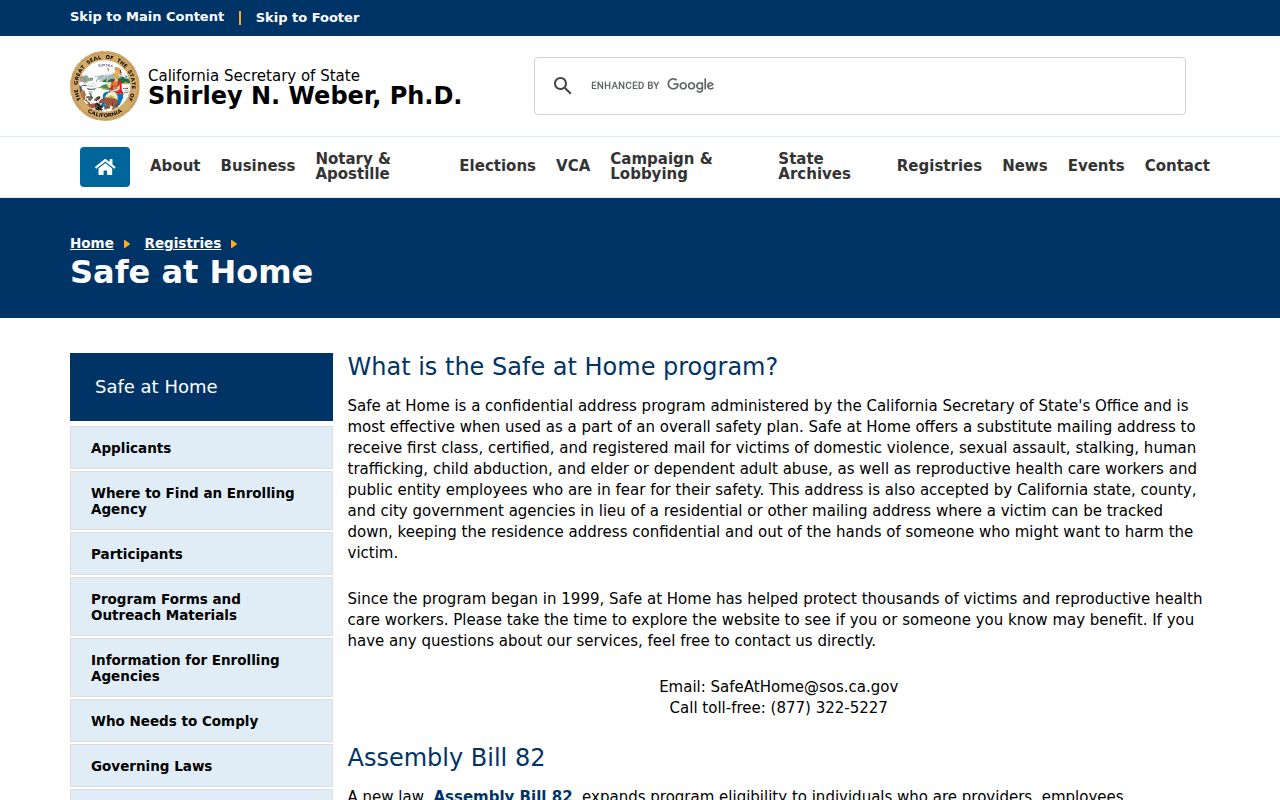
The Safe at Home image marks a limit that belongs in every neighbor search. A missing name is not evidence that a person is absent, and a visible owner is not proof of who is present. Save the source, date the result, and stop when the requested fact is protected or outside the record's scope.
Lawful use. Imperial neighbor research can support civic awareness, reconnecting with a known contact, personal safety planning, and ordinary curiosity about a block. Do not use names, parcels, voter data, or public requests to stalk, threaten, harass, intimidate, or expose anyone. Respect Safe at Home and every custodian's access rules.